What you need to know before visiting Guatemala (2026)
Posted by Grace on October 18, 2026
I just spent a week in Guatemala — the highlands around Quetzaltenango, Antigua, and Guatemala City — and it surprised me more than almost anywhere I've been. Not with landmarks (though those are stunning), but with the small things: the fruit, the coffee culture, the way people treat you.
Here are the interesting things I learned, the kind of stuff that never makes it into the generic Guatemala travel guides.
Contents
- The People Are Genuinely Warm — and There's a Reason
- The History Behind the Smiles
- Chicken Buses: Retired American School Buses
- Fruit You've Never Heard Of
- Coffee Is a Way of Life, Not a Beverage
- What to Eat
- Spanish That Actually Gets Used
- Practical Tips: DJRV Exit Form, the Airport, and Driving
The People Are Genuinely Warm — and There's a Reason
Everyone we met was kind, patient, and mild-tempered. It's not a performance for tourists. Maya heritage runs deep here, and with it comes a real respect for elders — you'll hear Don and Doña used as honorifics everywhere — plus a collectivist, family-first way of life and a value called convivencia, the art of living well together. Relationships matter more than efficiency.
One nuance worth knowing: direct confrontation is considered rude, so opinions sometimes travel indirectly. The courtesy is completely real; the candor is just quieter. Don't mistake politeness for agreement.
The History Behind the Smiles
When a local told me Guatemalans have "been through a lot," I looked it up. The civil war ran from 1960 to 1996 — 36 years, over 200,000 killed or disappeared, most of them Maya civilians. The 1976 earthquake killed 23,000 more. Add active volcanoes, hurricanes, and grinding poverty on top.
The warmth of the people makes more sense once you know what they've survived. It gave me a lot of respect for the place.
Chicken Buses: Retired American School Buses
Those wildly painted buses thundering down the highways started life as U.S. school buses. When they're retired stateside, they get shipped to Central America, repainted in neon folk art, and put back to work. Guatemala's are the most famous because of the paint jobs — rolling art.
The same buses run all over Central America (Panama calls theirs Diablos Rojos), but Guatemala turned them into a national icon. If you ride one, hold on.
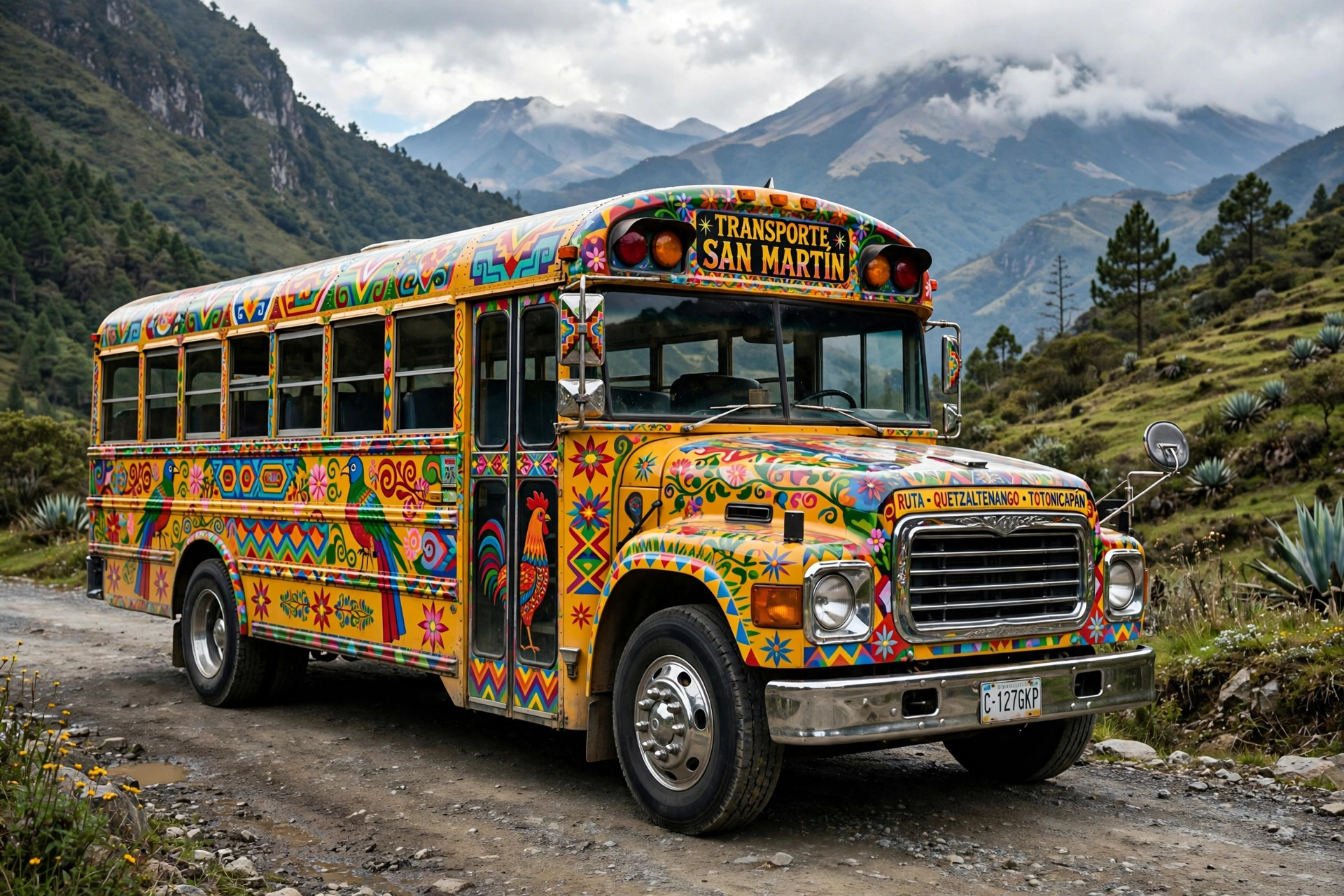 A chicken bus on a highland road — retired U.S. school buses, repainted into rolling folk art.
Fruit You've Never Heard Of
I photographed a spiky green fruit growing on a tree and had to ask what it was: guanábana (soursop), not yet ripe. In the markets, look for two more:
- Granadilla — sweet passion fruit. Crack the hard speckled shell, scoop out the pulp with a spoon. Seeds and all.
- Jocotes — small plum-like fruits, tart-sweet when they turn yellow-orange. Rock-hard and sour when green, so wait for the color.
Some of the best eating on the whole trip came from a paper bag of market fruit, not a restaurant.
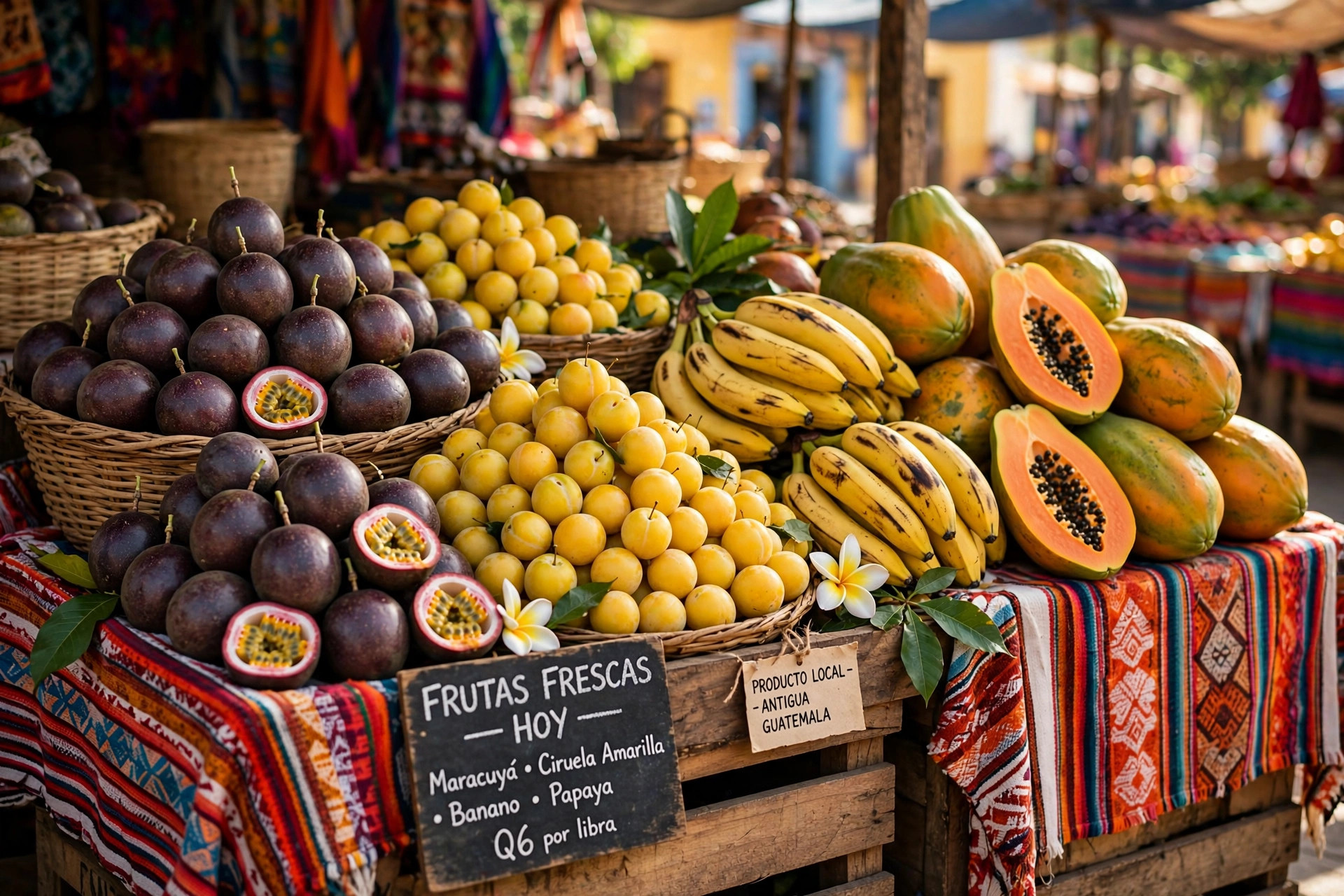 Market fruit in Guatemala — granadilla, jocotes, and varieties you won't find at home.
Coffee Is a Way of Life, Not a Beverage
At our finca stay, the estate coffee was a medium roast of Catuaí and Sarchimor beans, processed both washed and honey. If you stay on a coffee finca, ask at the front desk about a morning tasting or tour — and buy bags to take home. Go in the morning: afternoons in the highlands bring storms like clockwork.
In Quetzaltenango (Xela), the specialty coffee scene is genuinely good — pour-overs, Geisha lots, nitro cold brew, cascara. Worth seeking out if you're a coffee person.
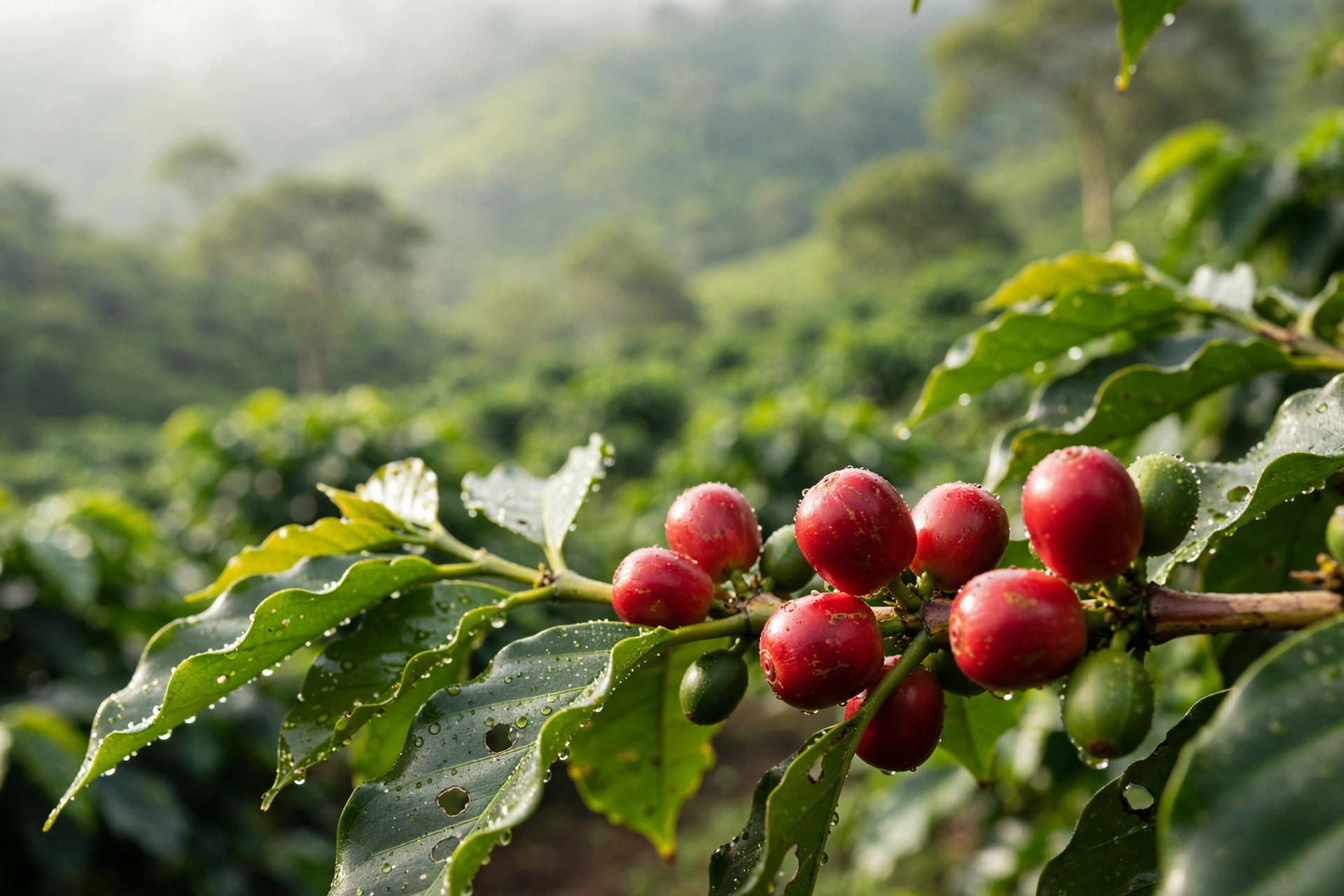 Coffee cherries at a highland finca — ask about a morning tasting if you stay on one.
What to Eat
Order a Desayuno Chapín (the Guatemalan breakfast) or Churrasco Chapín at least once. The two most distinctly Guatemalan things on any menu:
- Tamalitos de chipilín — little tamales made with chipilín, a native green
- Chirmolito — a fresh tomato-based salsa
Also worth trying: Caldo de Res, Ceviche Chapín, and tortillas con longaniza.
Spanish That Actually Gets Used
Five phrases did real work on this trip:
- "Tanque lleno, por favor." — Fill the tank. You'll say this a lot.
- "¿Me pone aire a la llanta, por favor?" — Can you put air in the tire? (We needed this one.)
- "Huevos estrellados." — Sunny-side-up eggs.
- "Con leche, por favor." — With milk, for coffee.
- "Neumático bajo." — Low tire. The dashboard warning that followed us for days.
Practical Tips: DJRV Exit Form, the Airport, and Driving
You need a digital declaration to LEAVE, too. Guatemala's DJRV form is required per movement — the entry form you did on arrival doesn't cover departure. Do the exit form the night before your flight on the SAT site and screenshot the QR. Airport Wi-Fi is flaky, and American asked for the QR at check-in.
[!TIP] Do the DJRV exit declaration the night before and screenshot the QR offline. It takes about 10 minutes.
La Aurora airport is small and easy. One terminal, short walks. The Casa del Ron lounge (the Zacapa rum one, north wing between gates 6 and 7) takes Priority Pass and LoungeKey — a good wait if your gate is nearby.
If you rent a car: Europcar's La Aurora counter is open 24 hours, even Sunday. Return the tank at the level on your agreement, keep the fuel receipt, and report any dashboard warnings at the counter so they're logged as pre-existing.
Weather rule of thumb: mornings are dry, afternoons storm. In the highlands, plan anything outdoors before 11 AM.
Guatemala surprised me — in the best way. The history is heavy, the people are light, and the fruit alone is worth the trip.
Buen viaje!